For a lot of people, “Self-Assessment tax return” is a phrase that brings on a small wave of dread. Forms, deadlines, sums that don’t quite add up, and a nagging worry that you’ve forgotten to declare something.
It doesn’t have to feel that way. Once you understand what’s actually required — and start early enough to do something about it — Self-Assessment becomes a manageable annual task rather than a January scramble.
What Is Self-Assessment?
Self-Assessment is how HMRC collects Income Tax from people whose tax isn’t automatically deducted through PAYE. Instead of tax coming straight out of your wages or pension, you report your income and work out what you owe.
You’ll usually need to file a return if you:
- Are self-employed or a sole trader
- Receive rental income from property
- Earn dividends above your allowance
- Have income from overseas
- Are a company director (in some circumstances)
- Have made capital gains from selling assets
- Have other untaxed income above HMRC’s thresholds
It’s worth reviewing your position each year, even if you’ve filed before. A change in your income can change whether you need to file at all.
Payments on Account: The One That Catches People Out
If this is your first return and your tax bill comes to more than £1,000, you may also need to make Payments on Account — advance payments towards next year’s bill.
In practice, this means your first January can be an expensive one: you pay the full amount owed for the year just ended, plus a first payment on account equal to half that amount. A second instalment follows on 31 July.
It’s a genuine cash-flow surprise if nobody warns you. Knowing about it in advance is half the battle.
The Dates That Matter
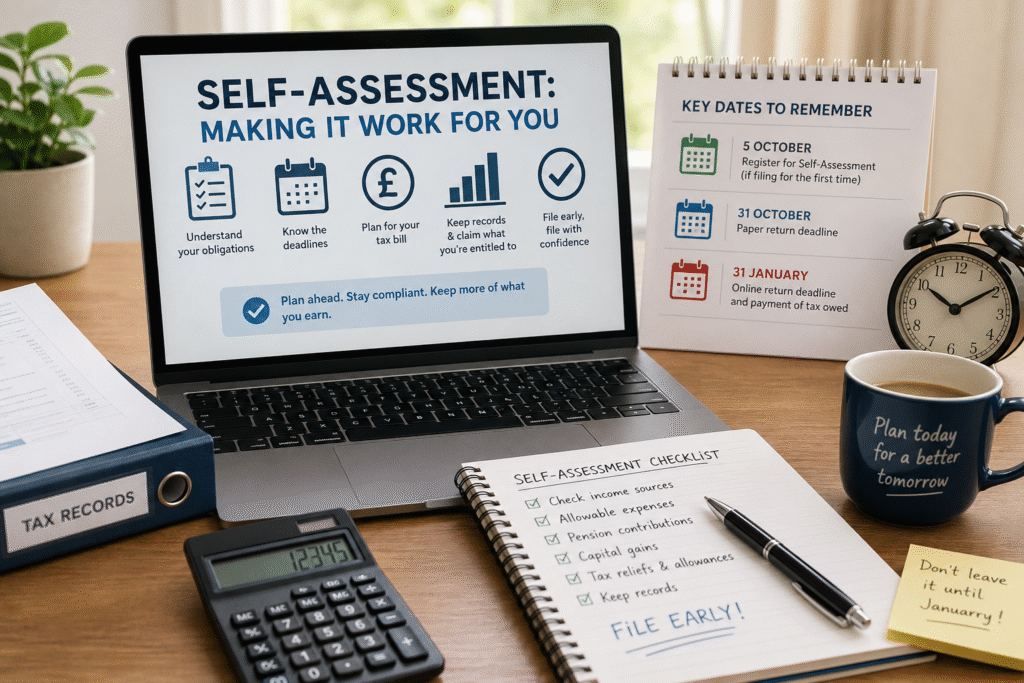
- 5 October — register for Self-Assessment if you’re filing for the first time
- 31 October — deadline for paper returns
- 31 January — deadline for online returns and payment of any tax owed
Miss 31 January and HMRC issues an automatic penalty — even if you owe nothing at all. Further penalties and interest build from there.
Where People Lose Money
Most overpayments and penalties come from avoidable slips:
- Forgetting a source of income
- Missing allowable expenses you were entitled to claim
- Leaving it until the last week
- Poor record-keeping
- Not setting money aside for the bill
If you’re self-employed, keeping records as you go through the year — rather than reconstructing them in January — makes an enormous difference.
Why Filing Early Pays Off
Filing early doesn’t mean paying early. Your payment is still due on 31 January. What it does buy you is time:
- Time to spot allowances and reliefs you’d otherwise miss
- Fewer errors, made under less pressure
- A clear figure to budget towards, months in advance
Are You Paying More Than You Need To?
The most common problem we see isn’t penalties — it’s people quietly overpaying because they haven’t claimed everything available to them. This comes up often for landlords, the self-employed, higher earners, those with investment income, and anyone juggling several income streams.
Whether your affairs are simple or spread across a few sources, a professional review can often find opportunities that are easy to miss on your own — and make the whole process considerably less stressful.
Don’t leave it until January. Acting early saves time, stress, and often money too.
If you’d like help with your Self-Assessment return, contact us — we’re happy to talk through your situation.